


Average set mortgage rates primarily held in location from yesterday early morning while the more volatile 5/1 adjustable rate took a big action down.
Today's market data, led by another day of declining Treasury yields, should put down pressure on rate of interest in the near-term.

Current mortgage and refinance rates
> Related: 7 Tips to get the best refinance rate
30-year fixed rate mortgage
At the time this was published, the average 30-year fixed mortgage rate reached 6.62%.
The average 30-year fixed rate mortgage (FRM) struck a record weekly low of 2.65% on Jan. 7, 2021, and a record weekly high of 8.89% on Dec. 16, 1994, according to Freddie Mac.
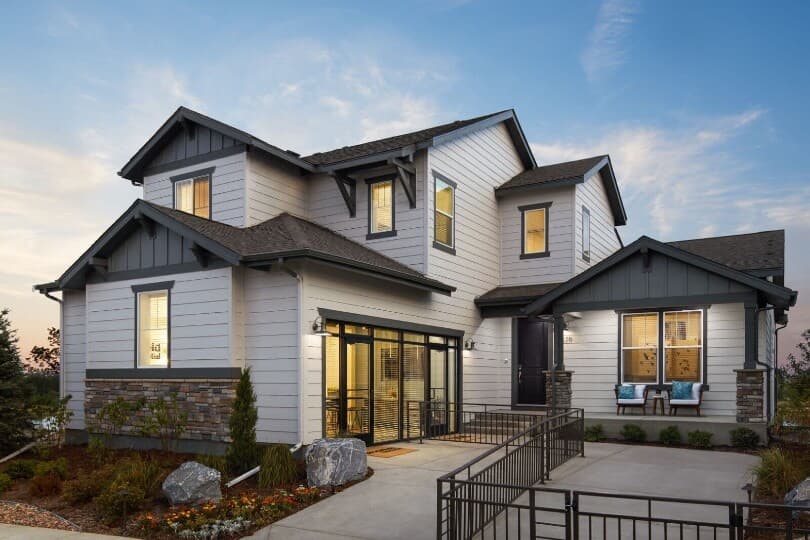
A 30-year FRM gives customers a budget-friendly choice however you pay more interest over the life of the loan compared to much shorter mortgages.
15-year fixed rate mortgage
Today, the average 15-year set mortgage rate went to 5.85%.
The average 15-year FRM struck a record weekly low of 2.1% on July 29, 2021, and a record weekly high of 18.63% on Sep. 10, 1981, according to Freddie Mac.
The 15-year FRM uses debtors a briefer term with less accrued interest, but the monthly payments will be much greater.
5/1 adjustable-rate mortgage
This morning's 5/1 adjustable rate mortgage balanced 5.76%.
Adjustable-rate mortgages (ARMs) usually have lower preliminary interest rates compared to set loans. Once that initial duration ends, the rates of interest gets used to the existing market conditions. In this case, the preliminary duration is 5 years and the adjustments depend on when every year. Homeowners with shorter term lending strategies tend to see these as beneficial.
Market information impacting today's mortgage rates
Here's a snapshot of the state of play as this post was released. The data primarily compares to roughly the exact same time business day previously, a lot of the motion will often have taken place in the previous session. The numbers are:

- The yield on 10-year Treasury notes decreased to 4.302% from 4.313%. (Great for mortgage rates.) More than any other market, mortgage rates generally tend to follow these particular Treasury bond yields
- Major stock indexes mostly fell today. (Great for mortgage rates.) When financiers buy shares, they typically offer bonds, pressing those prices down and increasing yields and mortgage rates. The reverse may happen when indexes are lower. But this is an imperfect relationship
Oil costs increased to $63.10 from $62.65 a barrel. (Bad for mortgage rates *.) Energy costs play a prominent role in producing inflation and also indicate future economic activity
Gold rates increased to $3,389 from $3,380 an ounce. (Neutral (but moving in an excellent direction) for mortgage rates *.) It is generally better for rates when gold rates increase and worse when they fall. Because gold tends to increase when financiers fret about the economy.
CNN Business Fear & Greed Index decreased to 55 from 64 out of 100. (Helpful for mortgage rates.) "Greedy" investors press bond costs down (and rate of interest up) as they leave the bond market and move into stocks, while "afraid" financiers do the opposite. So, lower readings are typically much better than greater ones
* A movement of less than $20 on gold prices or 40 cents on oil prices is a change of 1% or less. So we only count significant differences as great or bad for mortgage rates.
Caveats about markets and rates
Before the pandemic, post-pandemic upheavals, and war in Ukraine, you could take a look at the above figures and make a quite great guess about what would take place to mortgage rates that day. But that's no longer the case. We still make day-to-day calls. And are generally right. But our record for precision will not accomplish its previous high levels up until things calm down.
So, use markets only as a rough guide. Because they need to be incredibly strong or weak for us to count on them. But, with that caveat, mortgage rates today might nudge upward or hardly budge. However, understand that "intraday swings" (when rates change speed or instructions throughout the day) are a common feature today.
What's driving mortgage rates today?
Today
While no financial reports come out today, two Federal Reserve executive speak.
At 11am ET, Fed Governor Christopher Waller will provide a speech about payment innovation at the 2025 Wyoming Blockchain Symposium and can be watched here. At 2pm, Atlanta President Raphael Bostic goes on at the Fintech South 2025 conference and will discuss monetary policy. As always, their words will be dissected for any pointers on the upcoming Fed conference and rate choice in September.
Recent patterns
Freddie Mac's August 14 report put the weekly 30-year set mortgage rate average at 6.58%, down 5 basis points from the previous week. But note that Freddie's data are usually out of date by the time it announces its weekly figures. Still, they're a good method to track patterns.
Expert forecasts for mortgage rates
Looking even more ahead, Fannie Mae and the Mortgage Bankers Association (MBA) each has a group of economists committed to monitoring and forecasting what will take place to the economy, the housing sector and mortgage rates.
Here are their quarterly rate projections for the 2025.
The numbers in the table listed below are for 30-year, fixed-rate mortgages. Fannie updated its forecast on July 11 and the MBA updated theirs on July 17.
In its Mortgage Market Outlook released Jan. 24, Freddie Mac wrote, "our outlook for the U.S. economy in 2025 is positive, though we expect the pace of growth to moderate. In late 2024, the U.S. labor market started showing indications of cooling and we anticipate that to continue 2025. Modestly higher unemployment and slower task gains will reduce a few of the pressures on inflation."
Obviously, offered so many unknowables, these forecasts may be much more speculative than normal. And their previous record for accuracy - due to the volatile nature of interest rates - hasn't been wildly excellent.
Mortgage rate methodology
The Mortgage Reports receives rates based upon chosen requirements from several providing partners every day. We get to an average rate and APR for each loan type to display in our chart. Because we balance a selection of rates, it offers you a much better concept of what you may find in the marketplace. Furthermore, we average rates for the exact same loan types. For instance, FHA repaired with FHA fixed. Completion outcome is a great snapshot of daily rates and how they alter with time.
Current mortgage rates approach
We receive existing mortgage rates every day from a network of mortgage loan providers that use home purchase and refinance loans. Those mortgage rates revealed here are based upon sample borrower profiles that differ by loan type. See our full loan assumptions here.
Today's mortgage rates FAQ
What is a great mortgage rate?
An excellent mortgage rate is one that aligns with present market patterns and your monetary circumstance. Since August 14, 2025, the typical rate for a 30-year fixed mortgage is 6.58%, while the 15-year set mortgage balanced 5.71%, according to Freddie Mac.
How is your mortgage rate identified?

Mortgage rates are influenced by several factors, consisting of the economy, the debtor's credit history, the loan term, and the total housing market conditions. Lenders likewise consider the loan amount, down payment, and whether the loan is a traditional or government-backed loan.
How to get the least expensive possible rate today?
When looking for the most affordable possible mortgage rates, it's important to cast a wide web. Make the effort to explore offerings from different lending institutions, including banks, credit unions, and online mortgage suppliers. By collecting multiple quotes, you'll be much better equipped to determine the most competitive rate and terms that line up with your monetary objectives.
Is repaired or an adjustable-rate mortgage better?
Choosing in between the 2 frequently comes down to your monetary objectives and run the risk of tolerance. If you focus on predictability and plan to remain in your home long-lasting, a fixed-rate mortgage might be a strong option. However, if you're comfortable with some level of threat and anticipate selling or refinancing before prospective rate modifications kick in, an adjustable-rate mortgage could use preliminary lower rates that might match your needs.

Should you lock in your mortgage rate today?
Many projections anticipate mortgage rates will decrease gradually through 2025. However, this decline might be slow, and short-term rate increases are possible. If you're closing soon, locking in your rate might provide stability, but trust your impulses and run the risk of tolerance when choosing whether to drift or lock.